Updated September 2026 with MLS data through August 2026.
So, you’re dreaming of putting down roots in Port Orange or catching waves in New Smyrna Beach. Fantastic choice. Buying a house in Florida is an exciting ride, but it's one you need a good map for. The whole process really boils down to four main parts: getting your finances in order, the actual house hunt, making a smart offer, and finally, closing the deal.
This guide isn't about generic, statewide advice. It’s your hyper-local roadmap for navigating the Volusia County market, whether you're a first-time buyer or looking for your next family home.
Live listings and today's market numbers: New Smyrna Beach homes for sale
Your Florida Home Buying Journey Starts Here
Finding your way to homeownership in coastal communities like New Smyrna Beach or Port Orange can feel like a lot, but it’s completely doable when you know what to expect. Each town has its own unique flavor. Port Orange is known for its top-notch schools and family-friendly vibe, while NSB has that laid-back, artsy beach town charm. My goal here is to make you a savvy, confident buyer in these specific spots.
Buying near the coast comes with its own set of rules. We have to think about things like coastal insurance and flood zones, which you wouldn't worry about as much inland. Your proximity to the water really does shape everything from your monthly costs to your home's long-term value.
See homes for sale in Volusia County right now
Listings change weekly. Browse what is on the market today, updated in real time:
Browse Volusia County Homes →Understanding the Local Market Climate
The Florida housing market is always on the move. Heading into the final stretch of 2026, the local numbers lean slightly toward buyers. MLS data through August 2026 puts Volusia County's year-to-date median sale price at $354,000, up from $345,000 over the same stretch of 2025, with the August median flat year over year at $340,000. Inventory sits at 5.67 months (down from 7.78 a year earlier), and the median home takes 92 days to sell. That is close to a balanced market: prices are steady, sellers have competition, and buyers have time to think. If you want to dive deeper, you can explore more about Florida's market predictions to see the bigger picture.
This infographic breaks down the four core phases of buying a home here in Florida.
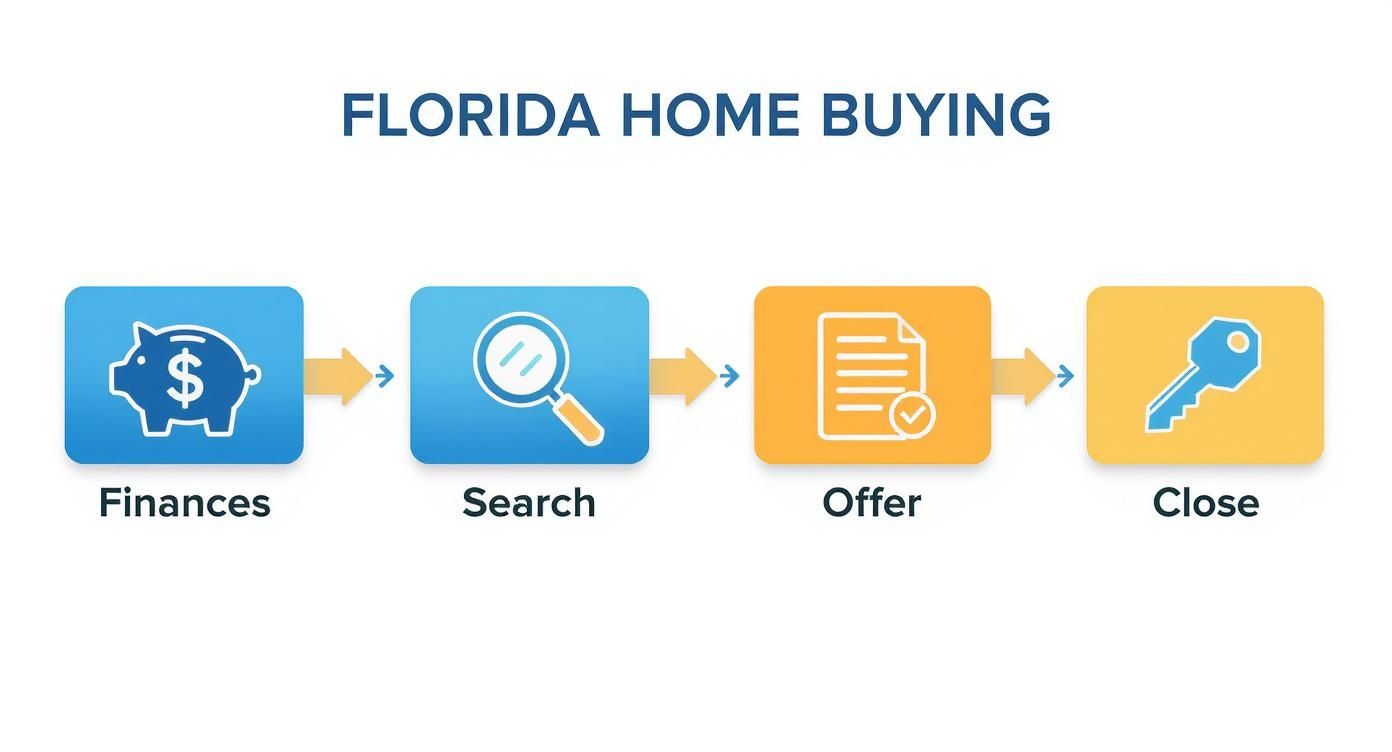
It’s a great visual reminder that every step, from that first credit check to finally getting the keys, is a crucial piece of the puzzle.
To give you a bird's-eye view, here's a simple breakdown of what to expect.
Florida Home Buying Key Stages at a Glance
Each of these stages has its own milestones and potential hurdles, but don't worry. We’re going to walk through all of it together.
How Long the Whole Thing Takes
From "I'm thinking about buying" to keys in hand, plan on 60 to 120 days. The contract-to-closing stretch is the part everyone focuses on, but the front end takes real time too, especially if you're relocating.
Your journey begins long before you tour the first home. A solid financial foundation is the single most important factor in a smooth and successful home buying experience in Volusia County.
I'll be here to guide you through each stage, sharing practical insights tailored to our unique slice of the Sunshine State. Let's get you into a place you'll absolutely love to call home.
Getting Your Finances Ready for the Florida Market
Before you even think about scrolling through listings for those charming New Smyrna Beach bungalows or the perfect family home in Port Orange, the real work begins. It’s not glamorous, but getting your finances in order is the single most important thing you can do. This is the groundwork that lets you shop with real confidence and make a winning offer when you find the house.
Think of it like this: your financial health is the foundation of your entire home purchase. Lenders in Florida need to see a stable, reliable financial picture before they’ll even consider handing you the keys. That means taking a hard look at your credit, income, and savings.
First, Get Clear on What You're Actually Buying
Before the lender conversation, write down the answers to a few questions. They shape everything from the loan type to which neighborhoods are worth touring:
- Primary residence, second home, or investment? Each has different financing, tax, and insurance implications.
- Timeline. When do you need to close?
- Budget. The monthly payment you're comfortable with, the down payment you have available, and how much property tax and insurance cost you can absorb.
- Submarket priorities. Beachside or mainland? A specific city or school? Walkability, boat access, golf, a gated community?
- Must-have features. Bedroom count, lot size, pool, garage, age of the home, single-story or two-story.
- Deal-breakers. Flood zones? HOA fees over a certain number? A roof past a certain age?
What Volusia County Lenders Are Really Looking For
When a local lender reviews your mortgage application, they aren't just looking at a single number. They're trying to build a complete picture of you as a borrower to gauge their risk. Three things really matter: your credit score, your debt-to-income ratio, and your savings.
A solid credit score is your golden ticket. For a standard conventional loan, most lenders here in the Port Orange area want to see a score of 620 or higher. If you're looking at an FHA loan, which is a fantastic option for many first-time buyers, you might get in the door with a score as low as 580, as long as you have a 3.5% down payment ready to go.
But don't just aim for the minimum. A higher score opens up a world of better interest rates, which can literally save you tens of thousands of dollars over the life of your loan. The difference between a 660 and a 740 score could easily translate into a much lower monthly payment.
Next up is your debt-to-income (DTI) ratio. This is just a percentage that shows how much of your gross monthly income goes toward paying your debts (think car loans, student loans, credit cards). As a rule of thumb, your total housing payment—mortgage, taxes, and insurance combined—shouldn't be more than 28% of your gross monthly income. Your total DTI, with all your debts included, should ideally stay under 43% to qualify for most loans.
Budgeting for the Real Cost of a Florida Home
That big number on the real estate listing? That's just the start. Especially in coastal communities like New Smyrna Beach and Port Orange, your monthly housing expenses will be a lot more than just the mortgage payment.
A realistic budget has to account for our local realities:
- Property Taxes: Volusia County property taxes can swing quite a bit from one area to another, so it’s essential to look up the tax history for any specific house you're considering.
- Homeowners Insurance: This is a huge one in Florida. How close you are to the ocean, the age of the roof, and what kind of hurricane-proofing the home has will dramatically affect your insurance premium.
- HOA/CDD Fees: Many of the newer, sought-after communities in Port Orange, like Waters Edge or Sanctuary, have Homeowners Association (HOA) fees. On top of that, some also have Community Development District (CDD) fees, which can add a hefty sum to your annual costs.
Don't make the common mistake of only saving for the down payment. You absolutely have to build a budget that anticipates the full monthly cost of living in your new Florida home. I've seen too many first-time buyers get caught off guard by underestimating insurance or HOA fees.
Saving for Your Down Payment and Closing Costs
Putting together a big down payment is a major hurdle. While the magic number of 20% is what you need to avoid Private Mortgage Insurance (PMI), it's definitely not a requirement for everyone. Plenty of people buy wonderful homes with much less.
Here's a quick rundown of the most common loan types and what you'll typically need to put down:
- Conventional Loan: Many first-time homebuyers can qualify with as little as 3% down.
- FHA Loan: This popular government-backed loan requires a minimum of 3.5% down.
- VA Loan: An incredible benefit for eligible veterans and active-duty military—it requires 0% down.
But the savings don't stop with the down payment. You also need to plan for closing costs. Here in Florida, expect them to run anywhere from 2% to 5% of the home's purchase price. For a $400,000 home in Port Orange, that means setting aside an extra $8,000 to $20,000 to cover fees for the appraisal, title search, loan origination, and a few other things.
Once you have these pieces sorted out, you're truly ready for the next move: getting that mortgage pre-approval. A pre-approval letter from a lender is what turns you from a casual window-shopper into a serious, powerhouse buyer that sellers will pay attention to.
Getting Pre-Approved: Use a Florida-Licensed Lender
Don't skip pre-approval, and don't use just any lender. In Volusia County in 2026, most sellers won't consider an offer without a pre-approval letter, and some won't accept anything short of a "verified" pre-approval where the lender has already reviewed your documents. Florida closings require a Florida-licensed lender, and coastal insurance costs feed into your debt-to-income calculation, so a lender who works this market regularly will get the numbers right the first time.
What your lender will ask for:
- Two years of W-2s or tax returns
- Your two most recent pay stubs
- Two months of bank statements
- Photo ID
- If you're self-employed: two years of tax returns plus a year-to-date profit and loss statement
Choosing Your Perfect Port Orange or NSB Neighborhood
Alright, you’ve done the hard work of getting your finances in order. Now comes the fun part—finding the perfect spot to call home. Here in our corner of Volusia County, you're looking at two incredible but very different towns: Port Orange and New Smyrna Beach.
Choosing between them isn’t about which one is "better." It's about finding the one that truly fits your lifestyle. One offers a classic, family-friendly suburban feel, while the other delivers a laid-back, artsy beach vibe. Let’s dive in.
The Family-Friendly Hub: Port Orange
If top-rated schools, big green parks, and everyday convenience are at the top of your list, Port Orange is a place you need to see. It’s a major draw for families, largely thanks to schools like Spruce Creek High School, which is consistently ranked among the state's best. The whole city is geared toward community living.
Convenience is king here. You’re never more than a few minutes from grocery stores, restaurants, and the main retail hub along Dunlawton Avenue. That kind of easy access makes daily life so much simpler, especially for busy households.
A Few Port Orange Neighborhoods to Know
- Waters Edge: This is a classic Port Orange community. Think established homes, mature oak trees, and a strong sense of community—the kind of place where kids ride bikes down the street and neighbors actually talk to each other.
- Sweetwater Hills: A popular spot for both first-time buyers and families looking for more space, this area offers a great mix of home styles and price points. Its central location also makes for an easy commute, with I-95 just minutes away.
- Town Park: If you're leaning toward newer construction, Town Park is a great bet. It features modern homes, community pools, and clubhouses, delivering that resort-style living experience many people are looking for in Florida.
The Coastal Charm of New Smyrna Beach
Now, if your dream involves salty air, quirky boutiques, and a vibrant local arts scene, then New Smyrna Beach might be calling your name. Life here—or NSB, as the locals call it—revolves around the water. The vibe is split between the lively, beachside Flagler Avenue and the historic, artsy Canal Street district on the mainland.
NSB offers a more relaxed, walkable pace. It’s the kind of town where you can park your car on a Friday and not need it again until Monday. You can spend your weekend hopping between art galleries, listening to live music at a beachside bar, or grabbing a bite at one of the incredible local restaurants.
The trade-off? For this prime coastal lifestyle, you'll often see slightly higher home prices and smaller lot sizes compared to Port Orange.
A Pro Tip for NSB: Choosing a neighborhood here is all about the specific vibe you're after. Do you want to be right in the middle of the action, or would you prefer a quieter spot just a short bike ride away from it all?
Exploring New Smyrna Beach Neighborhoods
- North Beach: Just north of the bustling Flagler Avenue, this area feels much more residential and quiet while still being an easy walk to the beach and all the action. It's a fantastic blend of tranquility and accessibility.
- Historic West Side: Centered around Canal Street, this neighborhood is filled with historic homes brimming with character. It’s perfect for anyone who appreciates history and wants to be close to the Saturday morning farmers market and the Indian River.
- The Isles: Located on the mainland side, you'll find more traditional suburban-style homes, often with larger yards. This area is a great compromise if you want the NSB address but need a bit more space than a typical beach bungalow can offer.
Comparing Port Orange vs New Smyrna Beach Lifestyles
Making the right choice really comes down to what you prioritize. The local housing market definitely reflects these different lifestyles. While median home prices across major Florida metros have shown signs of leveling off, demand in desirable coastal and suburban areas like ours remains strong.
MLS data through August 2026 puts Port Orange's year-to-date median sale price at $350,000, with a median 80 days on market and a median asking price of $332,500 on active listings. New Smyrna Beach runs higher: a year-to-date median of $445,000 (up from $425,000 over the same stretch of 2025), a median 100 days on market, and a median asking price of $550,000 on what is currently listed. That gap is the beach premium in one number. You can learn more about the Florida housing market to see the statewide data for yourself.
To help you visualize the difference, here's a quick side-by-side look at what each city offers.
Ultimately, the best advice I can give is to spend a Saturday exploring both places. Drive through the neighborhoods, visit the parks, grab lunch. Once you start imagining your daily life in each town, the right choice will become crystal clear.
Setting Up Your Search and Touring Efficiently
Once we've narrowed the target areas, I set up a daily MLS feed built around your criteria. New listings and price changes hit your inbox each morning, usually before they show up on Zillow or Realtor.com.
For touring, local buyers can usually cover their shortlist over one or two days. If you're coming from out of state, I structure a three- to four-day buying trip with eight to twelve tours, so you see enough to compare without burning a week.
What I look at on every walk-through, beyond the layout and finishes:
- Roof age and condition
- HVAC age (Florida systems average 12 to 15 years)
- The electrical panel (older Federal Pacific or Zinsco panels are an insurance problem)
- Polybutylene plumbing in 1970s and 80s homes
- Windows (impact-rated glass means lower insurance)
- Signs of past water intrusion
- Pool equipment age
- Sea wall and dock condition on waterfront homes
Making Your Offer and Getting Through Inspections
You’ve explored the tree-lined streets of Port Orange, maybe pictured your weekends on the sand in New Smyrna Beach. After all the financial prep and neighborhood tours, you've finally found it—the home that just feels right.
Now it's time to make the leap from searching to securing. This is where you put pen to paper (or, more likely, fingers to keyboard) to make an official offer and then dive deep into the property's true condition.
Making an offer in Volusia County involves a lot more than just picking a price. You have to craft a compelling proposal that gets the seller's attention while protecting your own interests. This is especially true when a great property hits the market and attracts multiple bids.
The pace of the market really comes into play here. MLS data through August 2026 shows Port Orange homes selling after a median 85 days on market with about 4.5 months of inventory, and New Smyrna Beach at a median 108 days with about 5.4 months. That is close to balanced: buyers have time to think, but a well-priced home in a good neighborhood still draws more than one offer. Statewide, the third quarter of 2025 brought 65,776 existing single-family home sales, a 1.6% increase from the previous year. This activity just underscores why a smart, well-structured offer is so critical when you decide to buy a house in Florida. You can discover more insights about Florida's active market on floridarealtors.org.
Run the Numbers Before You Fall in Love
Before the offer goes in, four quick checks keep the monthly cost honest:
- Property tax estimate. Use the Volusia County Property Appraiser's tax estimator with your purchase price, not the seller's current bill. The seller's number reflects years of capped assessments; yours will be higher.
- Insurance quotes. Get a homeowners quote and, if the property calls for it, a flood quote now. Premiums can vary by 2x between insurers for the same house.
- KCAP coastal risk review. For any coastal home, I run the Kirkland Coastal Assessment Protocol: flood zone, insurance cost, storm surge model, and elevation. It's free.
- HOA and CDD documents. Get them before you make the offer, not during the inspection period.
Understanding the Florida "As-Is" Contract
Here in Florida, almost every residential deal uses the "As-Is" Residential Contract for Sale and Purchase. That "as-is" part can sound a little scary, but it doesn't mean you're buying the house blind. It simply means the seller isn't obligated to make repairs based on what your inspector finds.
But the contract gives you a crucial safety net: the inspection period. This is a negotiated window of time, usually between 7 and 15 days, where you can bring in professionals to inspect the home from top to bottom. If you find something you don't like, you can cancel the contract for any reason and get your earnest money deposit back.
Your offer will detail several key components:
- Purchase Price: The dollar amount you're offering for the home.
- Earnest Money Deposit: This is your good-faith deposit, typically 1-2% of the purchase price, to show the seller you're a serious buyer.
- Closing Date: Your proposed date to finalize the sale and get the keys.
- Contingencies: These are clauses that protect you. Common ones include a financing contingency (the deal depends on you getting a loan) and an appraisal contingency (the home must appraise for at least the purchase price).
How to Make Your Offer Stand Out in NSB or Port Orange
In a desirable area, the highest price doesn't always win. A strong offer might include a larger earnest money deposit, a quicker closing timeline if you know the seller is motivated, or cleaner terms with fewer contingencies. For instance, if you have a rock-solid pre-approval, offering a shorter financing contingency period can make your offer much more attractive to a seller who wants a sure thing.
A well-written letter from your agent that highlights your strengths as a buyer—like your solid financing or your flexibility on the closing date—can sometimes tip the scales in your favor, even if your offer isn't the absolute highest.
The All-Important Inspection Phase
Once your offer is accepted, the clock starts ticking on your inspection period. This is your chance to get a professional to look under the hood. In Florida, you’ll definitely need more than just a standard home inspection, especially when it comes to getting insurance.
Comprehensive Home Inspection: A licensed inspector will examine all the home's major systems—plumbing, electrical, HVAC, roof, and foundation. Their report will identify any existing issues or potential red flags, from minor cosmetic fixes to major structural problems.
The Insurance Duo: 4-Point and Wind Mitigation
- A 4-Point Inspection is often required by insurance carriers for homes older than 20 years. It focuses on just four key areas: the roof, HVAC, electrical, and plumbing systems.
- A Wind Mitigation Inspection assesses how well a home can stand up to strong winds. Things like hurricane shutters, impact-resistant windows, and specific roof-to-wall attachments can earn you some serious discounts on your homeowners insurance premium.
What the Inspections Cost
Budget these up front so the inspection period doesn't turn into a scramble:
- Standard home inspection: $400 to $700
- Wind mitigation inspection: $100 to $150 (it costs about $100 and can save $1,000 or more a year in premiums)
- 4-point inspection: $100 to $150, for older homes
- Termite inspection: $50 to $150
- Septic inspection, if applicable: $250 to $450
- Pool inspection, if applicable: $150 to $300
- Flood elevation certificate, if the home is in a flood zone: $400 to $600
- Sea wall and dock inspection on waterfront homes
Negotiating After the Inspection
Let's be real: the inspection report will always uncover some issues. That's just the nature of houses. In Port Orange and New Smyrna Beach, we often see things like evidence of past termite activity, an old HVAC system that's struggling with the Florida heat, or a roof that’s nearing the end of its life.
Remember that "as-is" contract? While the seller doesn't have to fix anything, the inspection report gives you powerful leverage. You can go back to the seller and ask for a price reduction or a credit at closing to cover the cost of necessary repairs. For example, if the inspector finds the air conditioner is 15 years old and on its last legs, it's completely reasonable to ask the seller for a credit to help you buy a new one. This is a normal and critical part of the process, ensuring you move forward with a clear picture of your new home's real condition and future costs.
Getting Your Insurance Squared Away and Prepping for Closing Day
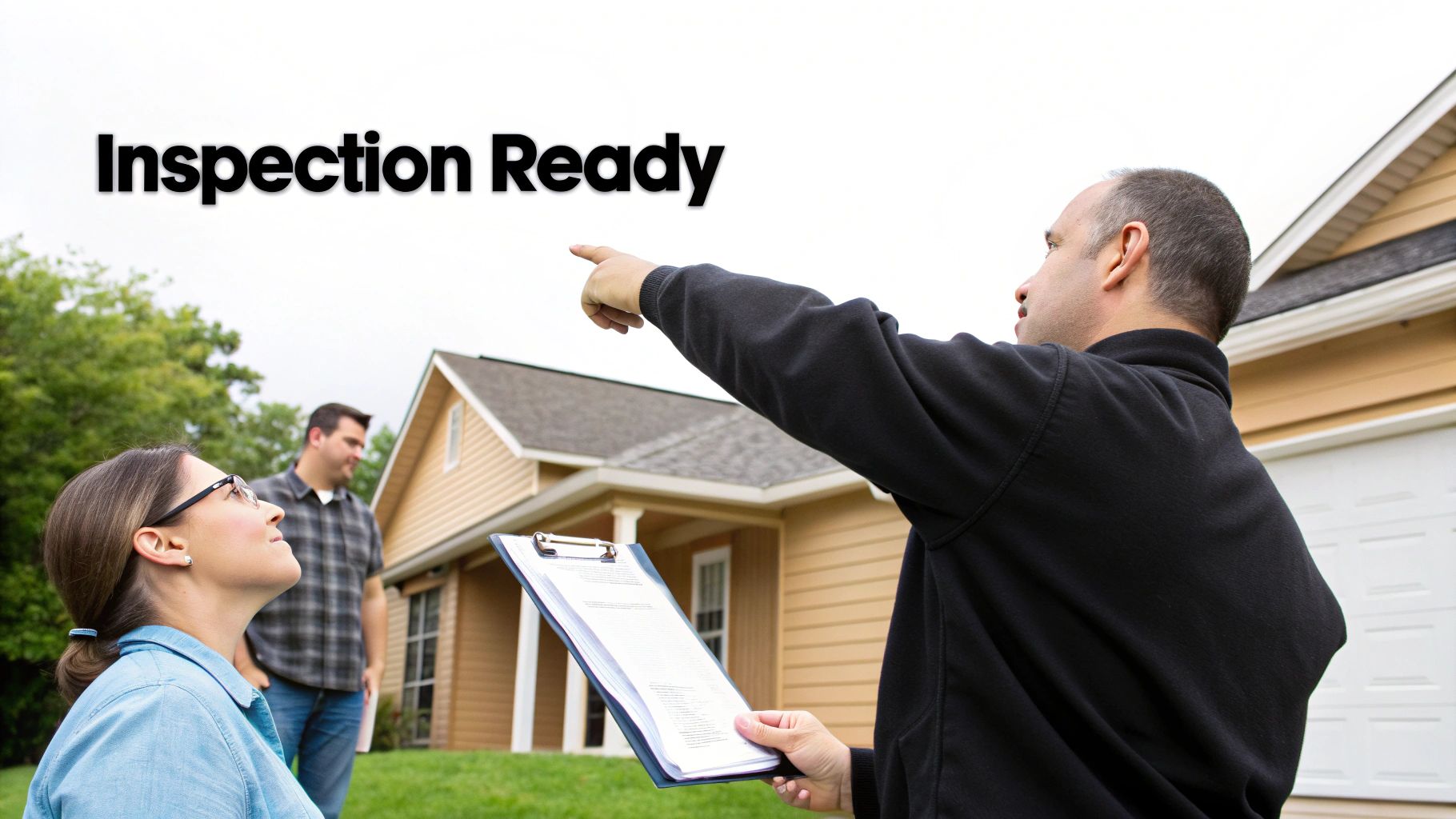
Once you've navigated the inspection period, you’re officially in the home stretch. It’s an exciting time, but a couple of major hurdles are still ahead before you get those keys: locking down the right insurance and understanding the final sprint to closing. In coastal communities like Port Orange and New Smyrna Beach, homeowners insurance is a beast of its own.
This isn't a task you can save for the last minute. Seriously. You should start shopping for insurance quotes the second you’re under contract. Your lender won't fund the loan without proof of insurance, and finding a policy that’s both adequate and affordable can sometimes be a real challenge around here.
The Unique Insurance Landscape of Coastal Florida
It’s no secret that Florida homeowners insurance costs are high—often 2-3 times the national average. This is especially true for homes dotting the coast in Volusia County. Several specific factors can send your premium soaring, and knowing what they are ahead of time can save you from a nasty financial shock.
Here's what insurance companies are looking at:
- The Roof's Age and Condition: This is the big one. I’ve seen deals fall apart over this. Many insurers in Florida simply will not write a new policy for a home with a roof over 15 years old, regardless of how good it looks. A newer roof, particularly with modern architectural shingles, is a massive advantage.
- The Home’s Elevation: How high the property sits above sea level directly impacts its flood risk, which is a whole separate issue we’ll get to next.
- Construction Type: Around here, concrete block (CBS) homes almost always get better insurance rates than wood-frame houses. They just hold up better against our high winds.
- Wind Mitigation Features: Remember those features from the inspection section? Things like hurricane shutters, impact-resistant windows, and reinforced garage doors can earn you some serious discounts on your premium.
My best advice? Start the insurance quoting process while you’re still in your inspection period. This gives you time to react if there's a problem and ensures you can actually get coverage before you're legally locked into buying the house.
Don't Forget About Flood Insurance
This is a critical detail that trips up a lot of Florida homebuyers: your standard homeowners insurance policy does not cover damage from flooding. Not from storm surge, not from rising rivers, nothing.
Even if a property in New Smyrna Beach or Port Orange isn't in a high-risk flood zone (an "X" zone on the maps), that doesn't mean it can't flood. Given our proximity to the Atlantic and the Indian River, a separate flood insurance policy is a smart investment for your peace of mind. You can check any property's official designation yourself using the FEMA Flood Map Service Center. It’s a crucial due diligence step for any coastal home.
The Appraisal
For a financed purchase, your lender orders an appraisal once you're through inspections. Two outcomes: the home appraises at or above the contract price and the loan moves forward normally, or it comes in below the contract price. If it's low, you renegotiate with the seller, bring extra cash to cover the gap, or walk away under your appraisal contingency.
Getting Ready for a Smooth Closing
With your insurance policy locked in, the last few weeks are a flurry of activity. Your lender, the title company, and your agent will be working behind the scenes to get all the paperwork in order.
About three days before you’re scheduled to close, you'll receive a document called the Closing Disclosure (CD). This is a five-page form that spells out every single dollar involved in the transaction. It's incredibly important to review this line-by-line with your agent to make sure everything is correct and there are no last-minute surprises.
Here’s a quick rundown of the fees you’ll see:
- Loan Costs: This is what your lender charges, including origination fees, the appraisal fee, and any "points" you paid to buy down your interest rate.
- Title and Escrow Charges: These are the fees for the title search, the title insurance policies protecting you and the lender, and the settlement fee for the company handling the closing.
- Taxes and Government Fees: You’ll see line items for recording the deed with the county and paying state documentary stamps ("doc stamps") on the mortgage and deed.
- Prepaids and Escrow: This section includes your first year's homeowners insurance premium and a cushion of property taxes that your lender collects to establish your escrow account.
What Those Fees Typically Run in Volusia County
All in, as covered earlier, plan on 2% to 5% of the purchase price in closing costs on top of your down payment.
Your very last step before signing is the final walk-through. We’ll visit the property one last time, usually 24 hours before closing, to ensure it’s in the same condition as when you first saw it and that the seller completed any repairs they agreed to.
Then comes the big day! You'll meet at the title company's office to sign a mountain of paperwork. Just be sure to bring your driver's license and be prepared to either wire your closing funds or bring a cashier's check. Once the ink is dry and the money has moved, you’ll officially get the keys to your new Florida home.
Two things worth knowing about closing day itself. Florida is a "wet funding" state, so the funds move when you sign, and closings happen at the title company's office. Plan on 60 to 90 minutes at the table.
After Closing: The Volusia County To-Do List
The keys are the finish line for the purchase, not for the paperwork. Here is what to handle next.
Within 30 days
- Set up utilities (Florida Power & Light or Duke Energy depending on the address, plus water, internet, and trash)
- Put your homeowners insurance on auto-pay
- Forward your mail at usps.com
- Get your Florida driver's license if you're a new resident (required within 30 days)
- Register your vehicle in Florida (also within 30 days)
- Register to vote in Florida
Between January 1 and March 1 of the year after closing
- File for the homestead exemption with the Volusia County Property Appraiser (more on why this matters in the questions below)
- File DR-501T portability if you're transferring Save Our Homes savings from another Florida home
Your Florida Home Buying Questions Answered
Buying a home brings up a ton of questions. It's totally normal. From figuring out what you can actually afford to understanding the ins and outs of our local market here in Port Orange or New Smyrna Beach, there’s a lot to wrap your head around.
I get these same questions from buyers all the time, so I've put together some straight-to-the-point answers to help you feel more confident as you move forward. Let's tackle some of the biggest ones I hear.
How Much Money Do I Really Need to Make?
This is always the first question, and the honest answer is: it depends. But for a ballpark figure, to comfortably afford a home around the Volusia County median, which MLS data through August 2026 puts at $354,000 year-to-date, your household should probably be making somewhere in the $100,000 to $115,000 range per year, depending on your down payment, rate, and insurance.
Why that number? Lenders generally don't want your total housing payment—that's your mortgage, taxes, and insurance combined—to be more than 28% of your gross monthly income. If you're looking in an area like Port Orange where insurance costs are often more manageable, you might lean toward the lower end of that income spectrum. But if you fall in love with a home in a New Smyrna Beach flood zone, the extra insurance cost means you'll need to be on the higher end to qualify.
Can I Get Help with My Down Payment?
Yes, you absolutely can. Florida has some fantastic programs specifically for first-time homebuyers that can be a real game-changer. The main one you'll want to look into is run by the Florida Housing Finance Corporation.
Their "FL Assist" program is one of the most popular, offering up to $10,000 in the form of a second mortgage. The best part? It's a silent second, meaning it has a 0% interest rate and you don't make any monthly payments on it. You just pay it back when you eventually sell the house, refinance, or pay off the main loan. I've seen this program help so many local buyers get their foot in the door when saving up a huge down payment felt impossible.
Never assume you're out of the game just because you don't have a 20% down payment saved up. A lot of buyers in Port Orange and NSB are successfully using state programs to buy their first home with a lot less cash upfront.
How Long Does the Whole Process Take?
Once you have an accepted offer, you can typically expect to close and get your keys in about 30 to 45 days. That’s the standard timeline here in Florida if you’re getting a mortgage.
A typical transaction breaks down something like this:
- Week 1: Your offer gets accepted, you deposit the earnest money, and we schedule all your inspections right away.
- Weeks 2-3: We’ll wrap up the inspection period and you'll start shopping for homeowner's insurance. At the same time, your lender will order the property appraisal.
- Week 4: The appraisal report comes in, and your loan file moves to the final underwriting review.
- Week 5-6: You get the magic words: "clear to close!" You'll review your final numbers on the Closing Disclosure, do one last walk-through of the home, and then it's off to the closing table.
Now, if you're a cash buyer, things can move much, much faster. It's not uncommon to close in just two weeks.
Should I Buy a New Construction Home?
New construction is a huge draw, especially in the growing parts of Port Orange, and for good reason. You get the benefit of modern building codes, which almost always means lower insurance premiums, plus the peace of mind of having everything brand new.
The trade-off is time. The building process itself can take anywhere from 6 to 12 months, so it requires patience. You’ll also find there’s generally less wiggle room on the price compared to buying an existing home. But if energy efficiency, low initial maintenance, and a home built to the latest hurricane standards are high on your list, a new build is definitely an option worth exploring.
What Is a Homestead Exemption and Why Does It Matter?
This is a huge deal for Florida residents. The Florida Homestead Exemption is a property tax benefit that can save you a significant amount of money. Once you qualify, it takes up to $50,000 off the taxable value of your primary home. That translates to hundreds of dollars in savings on your yearly tax bill.
Even more important is the "Save Our Homes" provision that comes with it. This caps how much your property's assessed value can increase each year to just 3%. In a market where home values are climbing, this is an incredible protection that keeps your taxes from skyrocketing. You'll need to apply with the Volusia County Property Appraiser between January 1st and March 1st of the year after you buy your home.
Ten Mistakes I See Volusia Buyers Make
- Budgeting off Zillow’s tax estimate. That is the seller's bill. Yours will be higher.
- Waiving the inspection contingency to compete. Never on coastal Florida.
- Not getting insurance quotes before going under contract. Insurance can be a deal-breaker.
- Using a non-local lender. Florida insurance and tax math is different.
- Skipping the wind mitigation inspection. It costs about $100 and can save $1,000 or more a year.
- Buying a condo without reading the milestone inspection report. That is the post-Surfside reality.
- Not filing for homestead the first year. That leaves $1,000 or more on the table.
- Falling in love with a home and ignoring the red flags. Trust the inspection.
- Using a generalist agent. Volusia submarkets vary too much for that.
- Closing without understanding the flood zone. Zone X versus Zone AE can mean thousands of dollars a year.
Jumping into the real estate market in Port Orange or New Smyrna Beach is a big step, but you don't have to figure it all out on your own. If you have more questions or you're ready to get started, Robert Kirkland - REMAX Signature is here to guide you. With deep local knowledge and a focus on one-on-one service, I can help make your home-buying journey a smooth one. The easiest first step is a 30-minute phone or Zoom consultation: we'll go through your situation, define your budget and target submarkets, and get your custom MLS feed running. Start your home search or request a free market analysis today.
Questions about Volusia County? Let me help.
I know this market street by street. Tell me your budget and must-haves and I will point you to the right fit.
Book a Free 15-Min Consult →