Updated September 2026 with MLS data through August 2026.
So, what exactly is a buyer's agent?
Put simply, a buyer's agent is a licensed real estate professional who has one job and one job only: to look out for your best interests when you're buying a home. They are your guide, your advocate, and your expert negotiator, dedicated exclusively to getting you the best possible outcome from the first house tour to the day you get the keys.
Think of it this way: walking into a real estate deal without a buyer's agent is like showing up to court without your own lawyer. The person on the other side of the table—the seller's agent—is a pro whose entire job is to get the best deal for their client, the seller. A buyer's agent puts an expert in your corner, leveling the playing field.
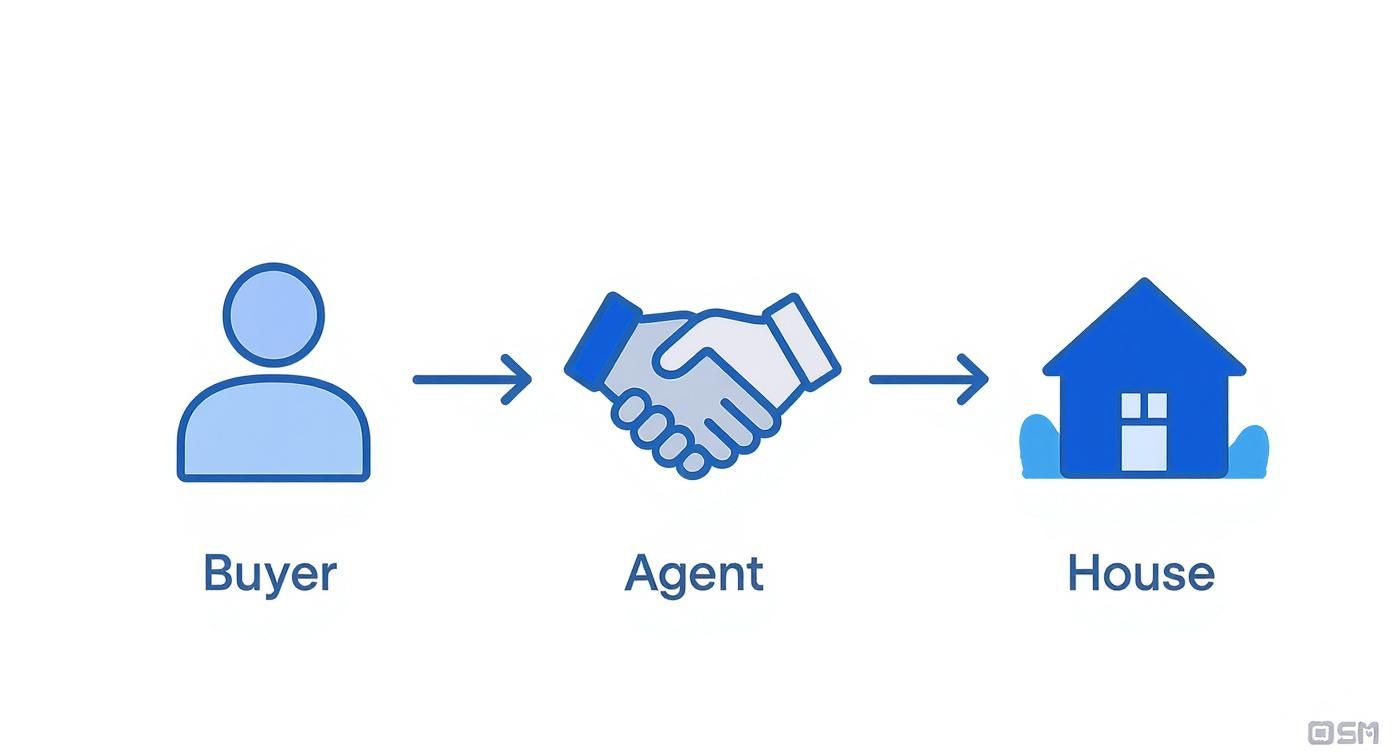
This is the core of what they do: they're the bridge connecting you, the buyer, to the right home, all while acting as your trusted partner.
This relationship is built on a crucial legal and ethical principle.
It All Comes Down to Fiduciary Duty
The single most important concept to understand is fiduciary duty. This isn't just industry jargon; it's a legal obligation that requires your agent to act solely in your best interest. It’s a promise.
This duty means your agent owes you:
- Loyalty: Their loyalty is to you and you alone—not the seller, and not their own bottom line.
- Confidentiality: Anything you tell them, especially sensitive financial details, stays private.
- Disclosure: They must tell you everything they know about a property that could affect your decision.
- Obedience: They have to follow your lawful instructions.
- Reasonable Care: They are expected to use their professional skills and knowledge on your behalf.
- Accounting: They must keep track of any money or documents you entrust to them.
This commitment is what truly sets a buyer's agent apart from anyone else involved in the transaction. It's no wonder that 89% of homebuyers who purchase a home do so with the help of an agent. The value of having a dedicated professional on your side is immense.
A buyer's agent is your strategist, negotiator, and trusted advisor. Their entire purpose is to protect your financial interests and empower you to make an informed, confident decision without the pressure of a sales pitch.
To make things even clearer, it helps to understand the different "players" in a real estate deal. Each type of agent has a very specific role and loyalty.
See homes for sale in Volusia County right now
Listings change weekly. Browse what is on the market today, updated in real time:
Browse Volusia County Homes →Real Estate Agent Roles at a Glance
Here’s a quick breakdown of who represents whom in a typical home sale.
As you can see, the Listing Agent works for the seller, and a Dual Agent tries to serve two masters—a situation that can create a serious conflict of interest. Only a true Buyer's Agent is 100% on your team.
How Your Buyer's Agent Works for You

So, beyond the legal definition, what does a buyer's agent actually do for you on a daily basis? It’s helpful to think of them as the project manager for one of the biggest investments you'll ever make. They're the ones wrangling all the complex logistics, digging into market data, and handling the tough negotiations so you don't have to.
Their work starts long before you even set foot in a potential home. The first step is a deep conversation to understand your goals—not just how many bedrooms you need, but what your lifestyle is like and where you see yourself in five or ten years. They take that vision and turn it into a realistic, actionable search plan.
Finding and Vetting Properties
With a clear plan in hand, your agent’s first big job is to comb through the market to find homes that truly match what you’re looking for. They have full access to the Multiple Listing Service (MLS), which is the most complete database of available homes, but a great agent’s search doesn't stop there.
Their real value comes from their network. A connected buyer's agent often knows about homes you'd never find on your own. This includes:
- "Coming Soon" Listings: These are properties that are about to go live but aren't public knowledge yet, giving you a head start.
- Off-Market Properties: Sometimes, a seller is open to an offer but hasn't officially listed their home. Your agent can tap into these opportunities.
- For-Sale-By-Owner (FSBO) Homes: They can professionally approach these sellers on your behalf, navigating a process that can be a minefield for buyers alone.
This insider access is a game-changer, especially when the market is hot and good homes get snatched up in a flash. After building a list of contenders, your agent will handle all the scheduling and logistics for viewings, making the most of your valuable time.
From Analysis to Offer
This is where your agent puts on their strategist hat. As you walk through houses, you might be imagining where your sofa will go, but they’re looking at the property with a critical, objective eye. They’re spotting potential red flags—an old roof, a dated HVAC system—and sizing up how the home stacks up against others in the neighborhood.
When you finally find "the one," they don’t just start filling out paperwork. They immediately run a Comparative Market Analysis (CMA), which is a detailed report on what similar homes nearby have actually sold for recently. This isn't guesswork; it's a data-backed strategy to figure out the right price. For context, the median sale price across Volusia County was $354,000 year to date and the median listing took 92 days to sell in August 2026 (MLS data through August 2026). That is the kind of backdrop that tells you how much room there is to negotiate.
Your agent’s job is to remove the emotion from the offer process. They use hard data to advise you on a price that is compelling to the seller but protects you from overpaying, ensuring your decision is based on market reality, not just excitement.
Armed with this CMA, your agent helps you craft an offer that’s designed to win. This is more than just a number. They'll structure the terms around your financing, inspection needs, and ideal closing date to make your offer as appealing as possible to the seller.
Then, they step into their role as your negotiator. From the moment the offer is submitted through any counter-offers and repair requests after the inspection, they are your voice. A skilled negotiator can save you thousands of dollars, secure credits from the seller for closing costs, or ensure that crucial repairs are handled before you ever get the keys. They are your advocate from start to finish.
The Real Benefits of Having an Expert on Your Side

Let's be honest, bringing on a buyer's agent isn't just about making life easier. It's a strategic move to tackle the biggest fears homebuyers face: missing out on the perfect house, the gut-wrenching stress of overpaying, and the sheer anxiety of going through a complicated process on your own. In a competitive market, they give you a serious edge.
One of the biggest advantages is their unmatched market access. Sure, you can browse listings on public websites, but your agent has a backstage pass. They see the entire market through the MLS and their own professional network, unlocking doors to homes you’d probably never find—think off-market deals and "coming soon" listings that put you ahead of the crowd.
Turning Expertise Into Savings
Finding the home is just the beginning. A great buyer's agent acts as your financial guardian. They bring objective, data-driven expertise to the table, which is your best defense against making an emotional decision you might regret. By running a detailed market analysis, they anchor your offer in solid facts, making sure you pay what a home is actually worth. Not a dollar more.
This is where their negotiation chops really shine. A seasoned agent knows precisely how to use inspection results, current market trends, and other details to your advantage. That expertise can save you thousands on the purchase price or get the seller to cover repairs and help with your closing costs.
A great buyer's agent transforms anxiety into confidence. They don't just unlock doors; they provide the data, strategy, and negotiation prowess to ensure you make a smart, sound investment without the stress.
Think about a situation I see all the time. Sarah, a first-time buyer, found a house she absolutely loved, only to find out it had multiple offers. Her heart sank. She figured she would either lose the house or have to shatter her budget to get it.
Her agent, however, saw a different angle. After a quick chat with the listing agent to understand what the sellers were looking for, he helped Sarah write an offer that was about more than just the highest price. They sweetened the deal with flexible closing dates, included a heartfelt personal letter, and attached a rock-solid pre-approval.
By playing up Sarah's strengths, they made her offer the most appealing one on the table. She won the bidding war without going over budget, turning a nightmare scenario into a massive victory. That's the real-world difference an expert advocate makes—they find the creative solutions that get you home.
How Buyer's Agents Get Paid
This is the big question on every homebuyer's mind: what is this actually going to cost me? The good news is, hiring an agent is one of the few parts of the homebuying marathon that typically doesn't involve a direct, out-of-pocket expense for you.
So, who foots the bill? In the vast majority of real estate deals, the buyer's agent commission is usually covered by the seller as a negotiated concession. Since the rule changes that took effect in August 2024, this works differently than it did for decades. A seller agrees on a fee with their listing agent, and separately, you and your buyer's agent agree in writing on what your agent will be paid before you tour homes together. Whether the seller covers some or all of that amount is negotiated in the offer.
Think of it as a "finder's fee" the seller offers to the entire real estate community. They're essentially incentivizing all the agents in the area to show their property to serious, qualified buyers. This structure is what lets you get dedicated, professional representation without having to write a check to your agent upfront.
Understanding the Commission Split
Let's break it down. In practice, most sellers in this market still offer to cover the buyer's agent fee as a concession, because it widens their buyer pool. But it is an offer, not a rule, and your buyer-broker agreement spells out what happens if a seller offers less.
Imagine a home sells for $400,000 with a total commission of 5%. That $20,000 is typically split right down the middle, 50/50, between the two brokerages involved. In this scenario, the listing brokerage gets 2.5% ($10,000), and your buyer's brokerage gets the other 2.5% ($10,000).
Your agent's compensation is set in your written agreement and is usually paid at closing, most often through a seller concession negotiated as part of your offer. The agreement aligns their goal with yours, getting you to the finish line successfully, with the cost handled inside the transaction rather than as a separate upfront bill.
The old model, where the seller's listing fee was automatically split with the buyer's agent, ended with the 2024 settlement changes. What replaced it is more transparent: you know your agent's fee before you start, and it is negotiated into each offer. Sellers frequently still cover it to attract the largest possible pool of buyers, which helps them sell faster and for the best possible price.
The Buyer-Broker Agreement
So how is this all made official? It all comes down to one key document: the buyer-broker agreement.
This is a straightforward contract you sign with your agent and their brokerage before you start touring homes. It’s a crucial step that lays everything out on the table so everyone is on the same page from day one.
The agreement formalizes your relationship, making them your official agent and outlining their duties to you. Most importantly, it clearly states how they will be compensated, ensuring total transparency. It specifies the fee your agent will receive, and we then ask the seller to cover it as part of your offer, which is how most transactions here still close.
Signing this agreement protects you by legally cementing your agent's fiduciary duty to act in your best interests. It’s the foundation of a trusting, effective partnership for your entire home search.
How to Find the Right Buyer's Agent
Finding the perfect home is one thing, but finding the right person to guide you there is just as important. Think of your buyer's agent as your co-pilot on this journey—they'll be your strategist, advocate, and trusted advisor. A thoughtful choice here is the single best move you can make for a successful purchase.
A great place to start is with referrals. Talk to friends, family, and coworkers who've bought a home recently. Their firsthand experience is gold. Don't just ask who they used; ask what it was really like. Did their agent truly listen? Were they a shark at the negotiating table? A genuine recommendation from someone you trust is often the most reliable way to begin your search.
Once you have a few names, head online and do a little digging. What’s their digital footprint look like? Check out their website, read online reviews, and see where they've been making sales recently. This step is all about making sure their expertise lines up with what you need and where you want to be.
Interviewing Potential Agents
Okay, you've narrowed it down to two or three promising agents. Now it's time to chat. This isn't a stuffy, formal interview—it's more like a vibe check to see if your personalities, communication styles, and goals click. You’re going to be spending a lot of time with this person, so you need to find someone you genuinely trust and connect with.
To get the most out of these conversations, have a few questions ready. Your goal is to get a feel for their process and how they'll work on your behalf.
Here are a few must-ask questions:
- How will you keep me in the loop? Communication is everything. Make sure their preferred method—whether it's calls, texts, or emails—works for you.
- What's your game plan if we land in a multiple-offer situation? This question is a great way to gauge their experience with bidding wars and crafting offers that actually win.
- How well do you really know the neighborhoods I'm looking at? True local knowledge is non-negotiable.
A top-tier buyer's agent isn't just a facilitator; they are a strategic partner. Look for someone who asks you thoughtful questions, demonstrates a deep understanding of the local market, and shows a genuine commitment to helping you achieve your goals.
Spotting the Right Traits
Listen carefully to their answers, but also pay attention to their overall approach. A truly great agent blends a personal touch with modern-day efficiency. It's interesting to note that 73% of buyers still prioritize a personal phone call from their agent about market news, while 71% also value text messages for quick updates on properties.
This shows how the best in the business combine direct, personal communication with the speed of technology. You can learn more about how agents are adapting by checking out these latest real estate statistics.
At the end of the day, you're looking for a partner, not just a service provider. The right agent will make you feel confident and supported every step of the way, turning what can be a stressful process into an exciting and successful adventure. By taking the time to research, interview, and choose wisely, you’re setting yourself up for the best possible outcome.
Questions about Volusia County? Let me help.
I know this market street by street. Tell me your budget and must-haves and I will point you to the right fit.
Book a Free 15-Min Consult →Ready to Start Your Home Buying Journey?

So, what's the bottom line? A buyer's agent is far more than just someone who opens doors for you. They’re your strategist, your advocate, and your guide through one of life's biggest transactions. Their job is to save you time, protect your money, and give you the confidence to navigate the market.
Think about it this way: going into the home buying process alone is like trying to navigate a storm without a captain. It's doable, but it's a lot riskier and more stressful. This is especially true today, with real estate becoming more global. U.S. property deals involving international buyers recently hit $56 billion, a jump of 33%. For complex transactions like these, a skilled agent is absolutely essential. You can read more about the latest trends in foreign buyer activity to see just how interconnected the market has become.
Buying a home is one of the most significant financial moves you'll ever make. Having a dedicated professional on your side transforms it from a stressful ordeal into an exciting adventure where you feel empowered and secure.
Having the right expert in your corner truly makes all the difference. When you're ready to take that next step, a no-obligation chat with a local specialist like Robert Kirkland can help you clarify your goals and start your journey with a trusted partner by your side.
Got Questions? Let's Get Them Answered
Even after getting the rundown on what a buyer's agent does, it's natural to have a few more questions pop up. Don't worry, that's completely normal. We've pulled together some of the most frequent questions we hear from homebuyers to give you straightforward answers.
Think of this as your quick-start guide to clearing up those last few uncertainties. Getting these details ironed out now will make your entire home search feel a lot smoother and more transparent from day one.
Can I Hire More Than One Buyer's Agent at a Time?
It’s a tempting thought—more agents, more houses, right? But in reality, this strategy usually backfires. When you decide to work with an agent, you'll almost always sign a buyer-broker agreement, which makes your relationship exclusive for a specific period.
Trying to juggle multiple agents at once can lead to some messy commission disputes and just generally complicates things for everyone involved. The best move is to take your time upfront: interview a few agents, find the one you click with, and then commit to working with them exclusively.
What's the Difference Between a Realtor and a Buyer's Agent?
This one trips a lot of people up, but the difference is actually pretty simple. A buyer's agent is any licensed real estate professional who represents a homebuyer. A Realtor®, however, is a licensed agent who has gone a step further and become a member of the National Association of Realtors (NAR).
Realtors® pledge to follow the NAR's strict Code of Ethics, which holds them to a higher standard than what's required by law. When your buyer's agent is also a Realtor, you're getting an extra layer of assurance that they're committed to professionalism and putting your interests first.
So, while not every real estate agent is a Realtor, the majority are. It’s a key credential that signals a dedication to a higher ethical standard in the business.
What If I Find a House by Myself?
It happens all the time. You might be driving around on a Sunday and spot a "For Sale" sign in front of your dream home, or maybe you walk into an open house and fall in love. Even if you find the property on your own, your agent's most critical work is just about to start.
As long as you've signed an agreement with them, they are your legal representative for the whole shebang.
All you have to do is let the agent at the open house (or the seller, if it's a FSBO) know that you're already working with someone. That's it. This simple heads-up allows your agent to jump in and take over the heavy lifting:
- Putting together a smart, competitive offer
- Handling all the back-and-forth negotiations
- Lining up inspections and the appraisal
- Making sure the mountain of closing paperwork is handled correctly
This ensures you have a pro in your corner from offer to closing, no matter how you first laid eyes on the property.
Are you ready to find your dream home in Port Orange, New Smyrna Beach, or Daytona Beach? With an expert guide in your corner, the process can be exciting and incredibly rewarding. Contact Robert Kirkland - REMAX Signature today for a no-obligation chat about your goals. Start your home buying journey with a local expert.